
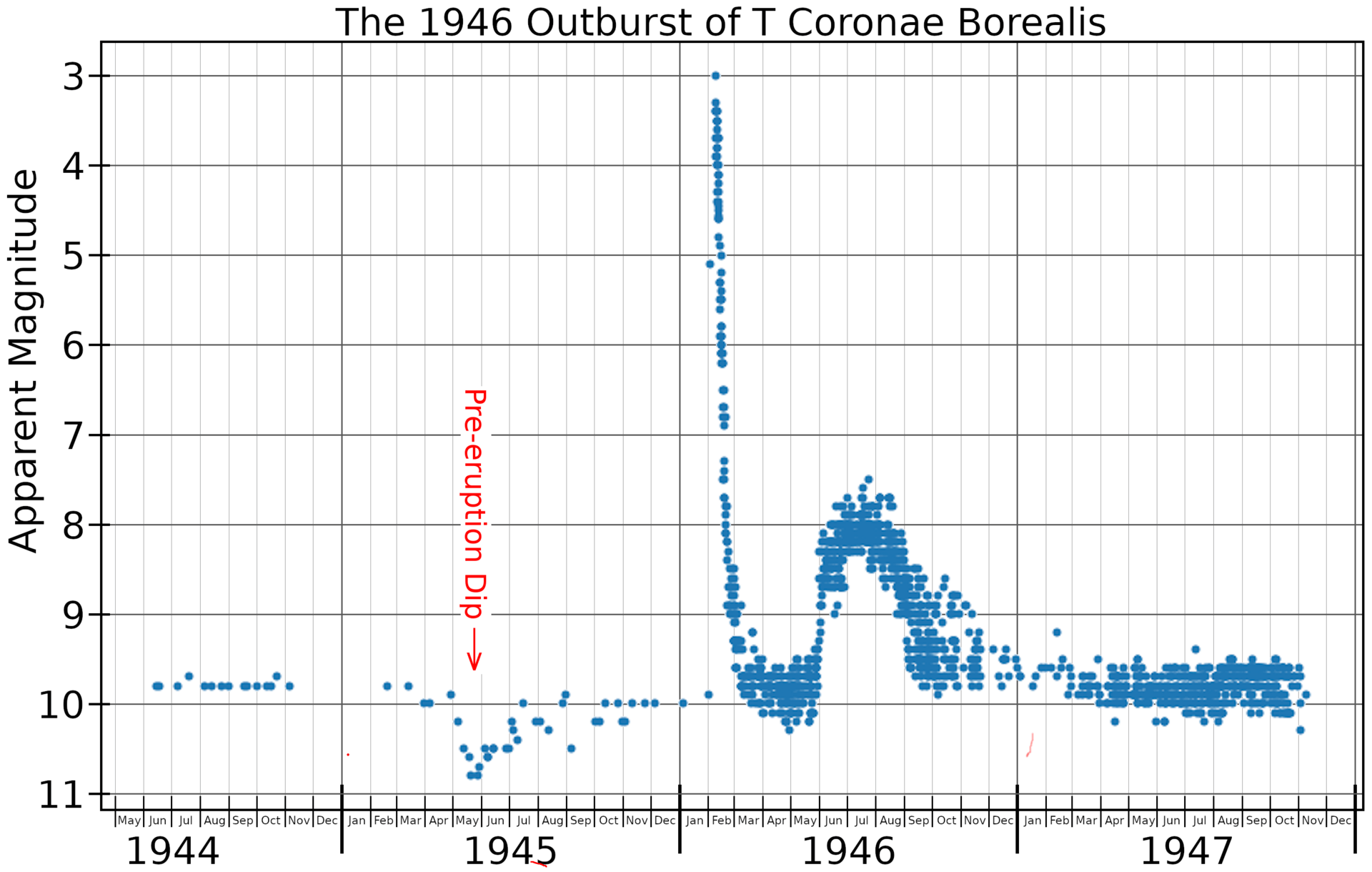
Sheesh… when is that Nova coming!??? Here’s a link to where to look – it should be here any day now! (but of course, that’s what astronomers have been saying for the past year!). The graph below shows the “dip” that happened just before the last nova… well… that dip happened again:
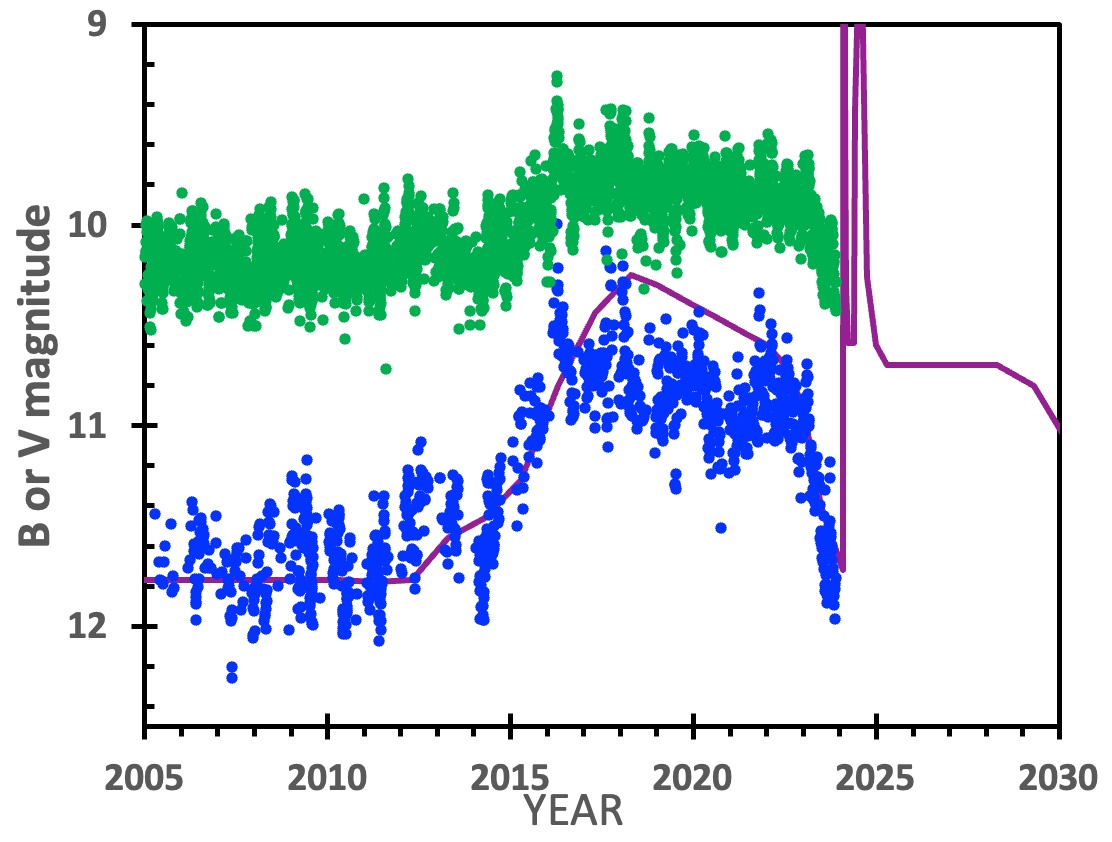
And the graph of its brightness the last two decades:
Venus and Jupiter will appear within a little more than 1 degree of each other in the sky, about the width of a thumb held at arm’s length. Click on this link to see a graphic showing the Venus-Jupiter dance this month!
The North Pole of the earth will be tilted toward the Sun, which will have reached its northernmost position in the sky and will be directly over the Tropic of Cancer at 23.44 degrees north latitude. This is the first day of summer (summer solstice) in the Northern Hemisphere and the first day of winter (winter solstice) in the Southern Hemisphere.
This full moon was known by early Native American tribes as the Strawberry Moon because it signaled the time of year to gather ripening fruit. It also coincides with the peak of the strawberry harvesting season. This moon has also been known as the Rose Moon and the Honey Moon.
As the anniversary of the Tunguska Event, Asteroid Day is the United Nations-sanctioned day of public awareness around planetary defense and the risks that asteroids pose to Earth.